How a Recession Affects Retirement
 by Grant Marsten - February 2025 (Updated: Sep. 2026)
A recession can be unsettling at any stage of life. But if you're approaching retirement—or already retired—a major economic downturn can feel especially intimidating.
Your investment portfolio may fall at the same time that you're starting to withdraw money from it. The value of your home or other assets may change. Inflation can make everyday expenses harder to predict. And if you're still working, a recession could affect your income or retirement date.
The good news? A recession does not automatically mean your retirement plan is in trouble.
The key is understanding which parts of your retirement are actually exposed to the downturn and having a plan that gives your investments, income, and spending enough flexibility to weather bad markets.
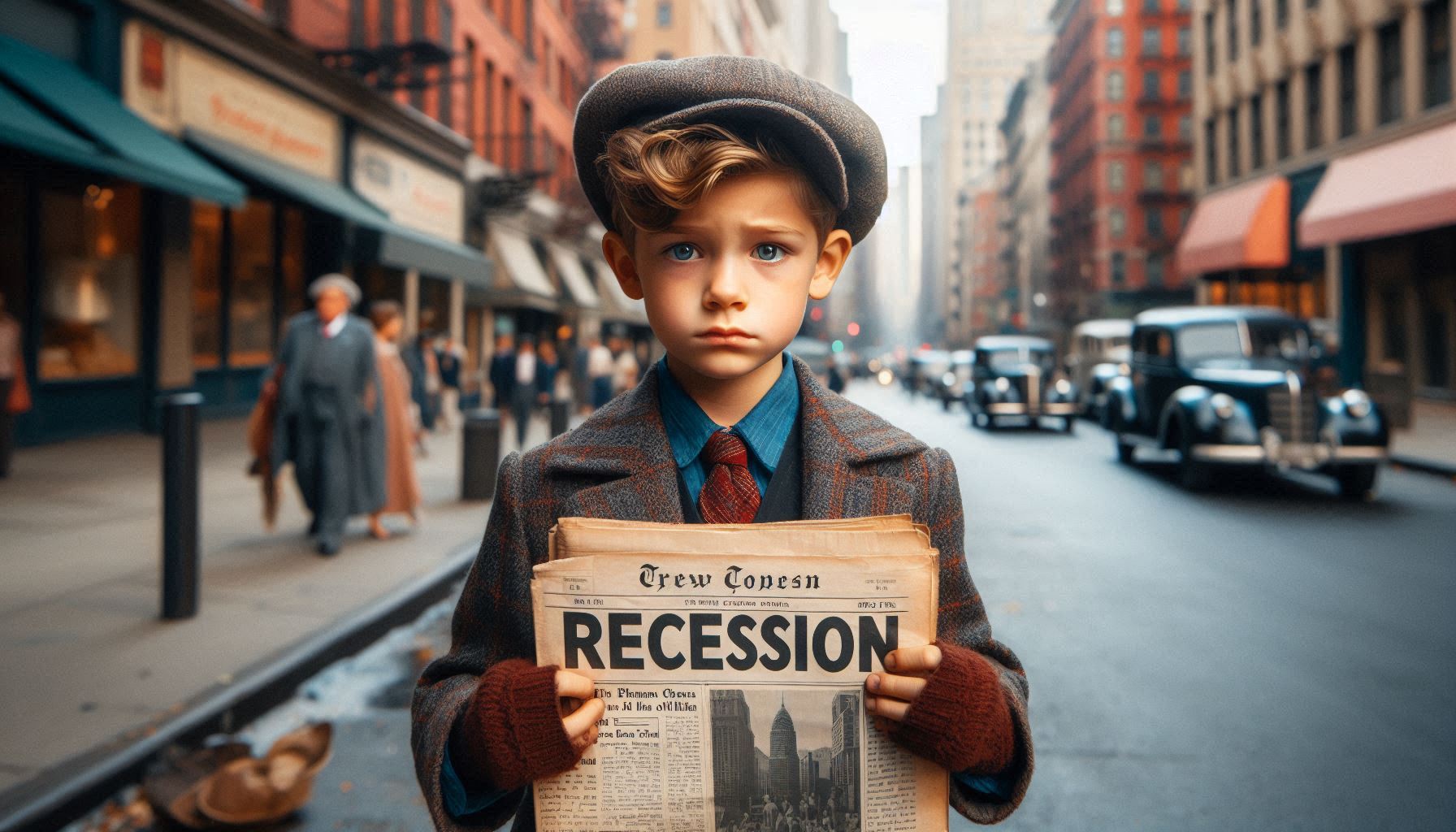
What Is a Recession?
A recession is a significant decline in economic activity across the economy. Recessions can affect employment, business profits, consumer spending, investment markets, and government finances.
Importantly, a recession and a stock market decline are not exactly the same thing. Stock markets can fall before a recession is officially recognized, recover while the economy is still weak, or decline for reasons unrelated to a formal recession.
For retirees, the important question isn't simply: "Are we in a recession?"
A better question is: "What happens to my retirement plan if markets fall and stay lower for a while?"
How a Recession Can Affect Your Retirement
The impact depends heavily on where you are in your retirement journey. Someone who is 20 years away from retirement has a very different problem from someone who retired last year.
A recession can potentially affect:
- Investment and retirement account balances
- Employment income
- The timing of retirement
- Portfolio withdrawals
- Business or rental income
- Inflation and household expenses
- Home values and other assets
- Confidence in your retirement plan
1. Your Retirement Investments May Fall
One of the most obvious effects of an economic downturn is a decline in investment values.
Stocks can fall significantly during periods of economic uncertainty. Depending on your portfolio, bonds and other investments can also fluctuate.
Seeing a retirement account drop by 20%, 30%, or more can be difficult. However, a temporary decline in account value is not necessarily a permanent loss.
The bigger concern for someone already retired is what happens if they are selling investments to fund their lifestyle while those investments are down.
2. Sequence-of-Returns Risk Becomes Important
One of the biggest retirement risks during a recession is called sequence-of-returns risk.
Imagine two retirees who experience exactly the same investment returns over 20 years—but one experiences the worst market returns at the beginning of retirement while the other experiences them near the end.
Their outcomes can be dramatically different.
That's because the first retiree is withdrawing money while the portfolio is falling. Those withdrawals can leave fewer investments available to participate in a future recovery.
This is one reason retirement planning should look at more than an average investment return. The order in which returns occur matters.
3. A Recession Could Change Your Retirement Date
If you're still working, a recession could affect your retirement plans in several ways.
Your investments may temporarily be worth less. Your employer could reduce hours, freeze hiring, restructure, or eliminate positions. A business you own could also experience lower revenue.
You may decide to work longer than originally planned—or you may find yourself retiring earlier than expected.
Either situation can change your retirement projections significantly.
Even an additional year or two of employment can mean more contributions, fewer withdrawals, and more time for investments to potentially recover. Conversely, an unexpected early retirement can create a larger financial challenge.
4. Retirement Income May Be More Important Than Your Portfolio Balance
When markets fall, it's easy to focus entirely on the value of your investment accounts.
But retirement security isn't determined by your portfolio alone.
Consider how much of your basic spending is covered by relatively predictable income sources such as:
- CPP and OAS in Canada
- Social Security in the United States
- Employer pensions
- Annuity income
- Rental income
- Part-time employment
The more of your essential expenses that can be covered by dependable income, the less dependent you may be on selling investments during a market downturn.
5. Recessions Can Affect Employment Income
A recession isn't only an investment problem.
If you're still working, employment income can be affected by layoffs, reduced hours, lower bonuses, business closures, or slower demand.
For someone five or ten years from retirement, this can be particularly important because those final working years may be when you're making some of your largest retirement contributions.
If your employment situation changes, revisit your retirement plan rather than assuming the original retirement date still works.
6. Healthcare and Other Expenses Don't Stop During a Recession
Retirees still need to pay their bills regardless of what financial markets are doing.
Housing, food, utilities, insurance, transportation, medications, travel, and other expenses continue during recessions.
In addition, inflation can sometimes remain a concern even when economic growth is weak. A recession therefore doesn't necessarily mean that everything suddenly becomes cheaper.
This is why a retirement budget should include room for both market volatility and unexpected expenses.
7. Your Spending Plan May Need to Become More Flexible
A rigid retirement budget can be difficult to maintain during a major market downturn.
Instead, consider separating spending into different levels of priority.
Essential Spending
This includes expenses such as housing, food, utilities, insurance, and necessary healthcare.
Important but Flexible Spending
This might include home improvements, vehicle upgrades, gifts, or larger discretionary purchases.
Optional Spending
Travel, entertainment, luxury purchases, and other lifestyle expenses may provide the greatest opportunity to reduce spending temporarily if markets experience a major decline.
Having this flexibility can allow you to reduce portfolio withdrawals without feeling like you've completely abandoned your retirement lifestyle.
8. Don't Make a Panic Decision
One of the most difficult parts of a recession can be emotional.
Watching your retirement savings decline can create a strong temptation to sell everything and move to cash.
But moving from investments to cash after a major decline creates another challenge: deciding when to get back into the market.
If the market subsequently recovers and you're still sitting in cash, you may miss some of that recovery.
Your investment allocation should be based on your goals, time horizon, risk tolerance, and need for income—not simply on what the market did last week.
9. Build a Retirement Cash-Flow Buffer
Some retirees use a portion of their portfolio for short-term spending while allowing longer-term investments to remain invested.
The exact amount of cash or lower-volatility investments that makes sense varies from person to person.
The objective isn't necessarily to avoid every market decline. It's to avoid being forced into selling long-term investments at an inconvenient time simply to pay next month's bills.
Your retirement plan should determine the appropriate amount rather than relying on an arbitrary rule.
10. Don't Forget About Government Benefits
In Canada, CPP and OAS can provide an important foundation for retirement income. In the United States, Social Security plays a similar role.
The timing of these benefits can affect your overall retirement cash flow. For example, CPP can generally begin between ages 60 and 70. Starting before 65 reduces the monthly amount, while delaying beyond 65 increases it, up to age 70.
That means a market downturn may be a reason to revisit your benefit timing— but it doesn't automatically mean that claiming benefits early is the right answer.
The decision should be considered alongside your health, longevity expectations, other income, taxes, spouse's benefits, and overall retirement plan.
What Should You Do If a Recession Happens Just Before Retirement?
This is one of the most stressful situations for a future retiree.
You may have spent decades saving, only to see your portfolio decline shortly before your planned retirement date.
Before making a major decision, examine the numbers.
- How much income do you actually need?
- How much of that income is covered by pensions or government benefits?
- How much is invested in stocks versus lower-volatility assets?
- Could you reduce discretionary spending temporarily?
- Could working another year improve the plan?
- Would delaying CPP, OAS, or Social Security make sense?
- Do you have enough flexibility to handle several poor investment years?
Sometimes the answer may be to retire as planned. Sometimes it may make sense to work longer. The important thing is to make the decision using your actual retirement cash flow rather than reacting solely to a market headline.
What If You Are Already Retired?
If you've already retired when a recession hits, focus on the parts of your plan that you can control.
Review your spending, withdrawal rate, portfolio allocation, guaranteed or predictable income, taxes, and upcoming large expenses.
If necessary, consider temporarily reducing optional spending rather than making a dramatic change to your entire investment strategy.
A recession is also a good reminder that retirement planning isn't a "set it and forget it" exercise. Your plan should be reviewed as your circumstances and the economic environment change.
Fun Facts
- A recession and a stock-market bear market are related concepts, but they are not the same thing.
- The timing of investment returns can matter enormously once you begin withdrawing money from your portfolio.
- Some of the most valuable retirement assets don't appear on an investment statement—such as a pension, government benefit, or flexible spending plan.
- Working even a little longer can change a retirement plan because it may add savings while delaying withdrawals.
- One of the biggest retirement risks isn't simply a falling market—it's being forced to sell investments during a downturn to fund expenses.
How to Prepare for the Next Recession
Nobody knows exactly when the next recession will happen. Trying to predict the next downturn isn't a retirement strategy.
Preparing your retirement plan for different market conditions is much more useful.
A resilient retirement plan should answer questions such as:
- What happens if my portfolio falls substantially?
- How much income do I need every year?
- Which expenses could I reduce if necessary?
- How long could I avoid selling investments after a major decline?
- When should I start CPP, OAS, or Social Security?
- What happens if I live longer than expected?
- How would taxes change if I alter my withdrawals?
- Can my retirement plan survive several different market scenarios?
Final Thoughts: A Recession Doesn't Have to Ruin Your Retirement
Recessions are an unavoidable part of the economic cycle, but they don't automatically destroy retirement plans.
The real challenge is making sure your retirement plan can handle bad years without forcing you into decisions you wouldn't otherwise make.
Build a realistic spending plan. Diversify appropriately. Understand your income sources. Give yourself flexibility. And most importantly, know what your retirement plan looks like under different market conditions.
A retirement plan isn't supposed to predict the next recession. It's supposed to help you navigate one when it arrives.
One Last Thing: Test Your Retirement Plan
You don't have to wait for the next recession to find out what happens to your retirement plan during a market downturn.
Run different scenarios now. What happens if your investments fall shortly before retirement? What if they decline several years after you retire? What if inflation remains elevated? What if you need to spend more than expected?
The more you understand your plan before a downturn happens, the less likely you are to make an emotional decision when the headlines become frightening.