
Retire at 55 with $500K: Is It Possible?
 by Tracy Gillis - October 2024 | Updated July 2026
Are you dreaming of retiring at 55 with $500,000 in savings? It might seem like a stretch, but whether it is realistic depends on much more than the size of your investment account. Your spending, housing costs, taxes, government benefits, investment returns, inflation, healthcare costs, and any additional income can all make a major difference.
Retiring at 55 also means your money may need to support you for four decades or more. That makes early retirement very different from retiring at 65 or 70. The good news is that you can model different scenarios before making the decision. Tools like the Retirementize retirement calculator can help you see how savings, income, spending, and retirement timing interact.
First Things First: Assess Your Retirement Expenses
To determine if you can retire at 55 with $500,000, you need to get a clear picture of your expected expenses. This includes essentials like housing, food, transportation, insurance, healthcare, taxes, and utilities, as well as discretionary spending on travel, hobbies, entertainment, or even starting a new career. You might actually be busier in retirement than you think!
A good starting point is creating a detailed retirement budget. The most important number isn't simply how much you have saved—it is how much you expect to spend each year and how that spending changes over time.
For example, someone with a paid-off home and $30,000 of annual spending has a very different retirement outlook from someone with a $2,500 monthly mortgage, expensive travel plans, and $60,000 of annual spending.
How Long Will $500K Last?
One of the biggest questions when planning to retire early is how long your savings will last. The popular 4% rule is often used as a starting point for retirement planning. A 4% initial withdrawal from $500,000 would be $20,000 in the first year.
But that does not mean $20,000 is guaranteed to last forever. The 4% rule was developed around historical market and retirement assumptions and is not a promise of future performance. Retiring at 55 also creates a longer planning horizon than the traditional 30-year retirement period often associated with the rule.
Your actual sustainable spending could be higher or lower depending on investment returns, inflation, taxes, portfolio composition, market conditions, government benefits, and how flexible you are willing to be with your spending.
Additional Income Sources: Stretching That $500K
$500,000 may not sound like enough to fund a long retirement by itself, but your investment portfolio doesn't necessarily have to provide all of your retirement income. Additional income can dramatically change the calculation.
- Rental Properties: Rental real estate can provide income, although it also comes with maintenance, vacancies, taxes, insurance, and other expenses.
- Part-Time Work and Side Gigs: Even a modest amount of employment income can reduce the amount you need to withdraw from your portfolio.
- Government Benefits: Depending on where you live, future income may include CPP and OAS in Canada or Social Security in the United States.
Canada: CPP and OAS Can Become Important Later
For Canadians, retiring at 55 does not mean government retirement benefits immediately begin. CPP can generally start as early as age 60, while OAS starts no earlier than age 65. Both benefits can be delayed for larger monthly payments.
The amount of CPP you receive depends on factors including your contributions, earnings history, and the age at which you start the pension. OAS is also affected by factors such as residency history and income.
That means a 55-year-old Canadian may need a larger portfolio during the years before CPP and OAS begin, followed by a potentially lower portfolio withdrawal requirement once those benefits start.
United States: Social Security Works Differently
For U.S. retirees, Social Security retirement benefits can generally begin at age 62, but starting before full retirement age permanently reduces the monthly benefit. For people born in 1960 or later, full retirement age is 67.
This makes the years between 55 and 62 particularly important for someone planning an early retirement in the United States. A portfolio may need to provide the majority of household income during this period before Social Security begins.
Healthcare: The Elephant in the Room
Healthcare is one of the biggest considerations when retiring at 55. In the United States, retiring before age 65 means planning for health insurance before Medicare eligibility. In Canada, the situation is different because medically necessary hospital and physician services are generally covered through provincial and territorial health insurance, but retirees can still face significant costs for prescriptions, dental care, vision care, travel insurance, long-term care, and other services.
A widely cited Fidelity estimate from 2022 projected that an average 65-year-old retired U.S. couple might need approximately $315,000 saved, after tax, to cover healthcare expenses throughout retirement. That figure was specific to the U.S. and the assumptions used in the study—it should not be treated as a universal current healthcare budget or applied directly to Canadian retirees.
If you're retiring at 55, healthcare planning should therefore be part of your retirement model from day one.
Watch Out for Inflation
Retiring at 55 means your savings may need to support you for 30, 40, or even more years. One of the biggest threats to a long retirement is inflation.
Inflation reduces the purchasing power of your money over time. A retirement budget that feels comfortable at 55 may not provide the same lifestyle at 75 or 85 unless your income and investments keep pace with rising costs.
This is one reason retirement planning shouldn't simply assume that your expenses will remain exactly the same forever. Some costs may rise, while others may decline. Your retirement plan should account for changing spending patterns as you move through different stages of retirement.
Living Outside North America: Exploring Affordable International Options
Retiring abroad can be another way to reduce living expenses, although it requires considerably more planning than simply comparing monthly rent.
Countries in Southeast Asia and elsewhere can have lower everyday living costs than many parts of Canada and the United States. Housing, food, transportation, and some healthcare services may be considerably less expensive in certain locations.
However, anyone considering an international retirement should also investigate visa requirements, taxation, healthcare access, insurance, currency fluctuations, travel costs, housing availability, and how easily retirement accounts and investments can be accessed from abroad.
International living costs also vary enormously by city and lifestyle. Instead of relying on a single "$1,000 per month" or "$2,000 per month" figure, build your retirement plan around the specific location and lifestyle you are actually considering.
An Example That Works
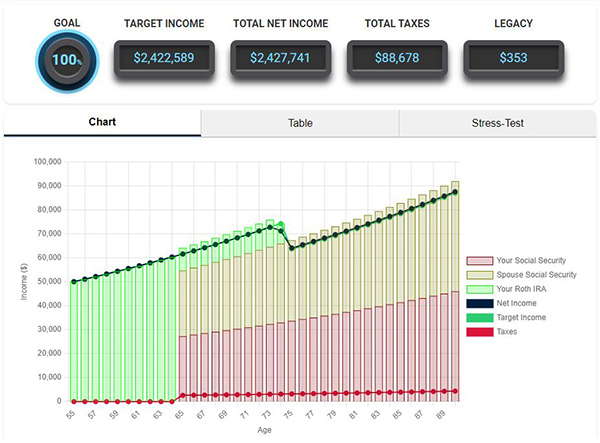
Let's consider a simplified example. Suppose a couple retires at 55 with $500,000 invested and wants to spend $50,000 per year after tax during the first 20 years of retirement.
At first glance, $500,000 clearly isn't enough to provide $50,000 per year indefinitely. However, the calculation changes if the couple has additional income sources, reduces spending later in life, earns investment returns, or receives government benefits.
For example, suppose their spending falls later in retirement and they begin receiving CPP and OAS in Canada, or Social Security in the United States. The amount required from their investment portfolio could then decline.
The key is that retirement income does not have to come from one source. A successful early-retirement plan often combines portfolio withdrawals with government benefits, pensions, part-time income, rental income, or other sources.
The Retirementize calculator can help illustrate how these different income sources and spending levels affect a retirement plan over time.
Fun Facts
- Retiring at 55 can potentially give you several additional decades to travel, pursue hobbies, spend time with family, or start a new business.
- Many early retirees don't completely stop working. Part-time work, consulting, seasonal employment, or a small business can provide both income and purpose.
- Retirement spending isn't necessarily constant. Housing, travel, healthcare, hobbies, and other expenses can change significantly as you age.
Can You Really Retire at 55 with $500K? It Depends
Retiring at 55 with $500,000 can be possible for some households, but there is no universal savings number that guarantees a successful early retirement.
The most important question is not simply "Do I have $500,000?" Instead, ask: How much income will I need, how much can my portfolio reasonably provide, and what other income will I receive throughout retirement?
Someone with a paid-off home, modest spending, pension income, and flexible retirement plans may have a very different outcome from someone with high housing costs, expensive travel plans, and no other income.
Using the Retirementize retirement calculator can help you model different combinations of savings, spending, retirement ages, income sources, taxes, and investment assumptions.
If you're building your early-retirement plan, check out our other resources such as retirement budgeting and the Retirement Income vs. Savings Calculator. You can also review our articles on common retirement planning mistakes and finding your retirement savings magic number.
Conclusion
Retiring at 55 with $500,000 is not a simple yes-or-no question. It depends on your spending, housing costs, investment strategy, taxes, inflation, healthcare, government benefits, and whether you have other sources of income.
The biggest advantage of planning early is that you can test different scenarios before you actually retire. You might discover that $500,000 is enough with a lower spending target, part-time income, or future pension benefits. You might also discover that you need more savings than you originally expected.
Either way, the goal is to understand the numbers before making a major retirement decision. Use the Retirementize calculator to model your retirement income and see how your plan changes as you adjust your savings, spending, retirement age, and income sources.
